By
Simon Hazeldine
Most salespeople think negotiating power comes from confidence, preparation, or holding their price. It does not.
Your real power comes from one thing, how deeply you understand the other side’s problems.
In every negotiation, the person who knows where the pain is has the power. Pain drives urgency, shapes priorities, and defines value far more than logic ever will.
Understanding pain is not manipulation. It is relevance. And relevance is the foundation of influence.
1. Why Pain Equals Power
Negotiation is not a tug of war over price. It is a discovery process about pressure.
Behind every demand, objection, or aggressive tactic is a pressure point. It may be a deadline they cannot miss, a performance target they must hit, or a stakeholder they have to satisfy. Once you uncover that pressure, you gain leverage because you understand what really matters.
Many negotiators miss this because they defend their own position instead of exploring the other party’s constraints.
Your job is simple, find the pain. Then solve it profitably.
2. Case Study: How a Salesperson Protected Their Price by Solving a Buyer’s Internal Pressure
A technology provider was negotiating with the CIO of a logistics company who demanded a significant percent discount.
His justification was blunt. “Your competitors are cheaper.”
Instead of defending price, the salesperson shifted focus by asking, “What is happening internally that makes price the top priority right now?”The CIO gave a surface answer about cost control. Most sellers would leave it there. She did not.
She asked a better question. “What happens if you do not implement a new analytics platform this quarter?”
Now the real pressure came out.
The company was experiencing frequent service delays because their outdated systems could not forecast demand accurately. The CEO had placed the CIO under scrutiny. In the next board meeting, he was expected to present a measurable improvement plan. If nothing changed, his credibility, and possibly his job security, were at risk.
This changed the negotiation. The salesperson reframed the discussion.
“It sounds like your priority is not saving money. It is demonstrating performance improvement to the board before your review. If we support you with rapid deployment and a results dashboard, then a discount may not be the most important factor.”
The CIO agreed. The discount request disappeared. The deal closed at full price because she solved the problem that mattered most.
That is profit in the pain.
She won not by pushing harder, but by understanding deeper.
3. How to Find the Pain Points
You cannot uncover pain if you are not intentionally looking for it.
a) Ask “What happens if…” questions
These questions reveal consequences and internal pressures.
b) Listen for emotional language
“Need,” “must,” and “have to” signal urgency.
c) Map the stakeholder ecosystem
Every negotiation contains invisible pressures from finance, operations, marketing, and leadership. Map them before you negotiate.
4. The Ethical Advantage
Solving the other side’s pain is not manipulation. It is partnership.
Ethical power is sustainable because it is built on insight, value, and trust.
Negotiate to help the other party succeed and they become far more flexible where it matters.
5. Turn Knowledge Into Leverage
Before your next negotiation, write down:
- What pressures or risks might they be under?
- What would it cost them if no agreement is reached?
- How does my solution remove or reduce that pressure?
Negotiation is not fighting. It is diagnosing.
When you find the pain, you find the power.
And that is where profit lives.
Subscribe to Simon Hazeldine’s
“More Sales, More Often, More Margin” newsletter.
Simon’s regular newsletter contains powerful and practical sales and negotiation
strategies, tactics, and tips to help you to grow your revenue and bottom-line profits.
About the author
Simon Hazeldine works internationally as a revenue growth and sales performance speaker, consultant, and coach. He empowers his clients to get more sales, more often with more margin.
He has spoken in over thirty countries and his client list includes some of the world’s largest and most successful companies.
Simon has a master’s degree in psychology, is the bestselling author of ten books that have been endorsed by a host of business leaders including multi-billionaire business legend Michael Dell and is co-founder of leading sales podcast “The Sales Chat Show”.
He is the creator of the neuroscience based “Brain Friendly Selling”® methodology.
Simon Hazeldine’s books:
- Neuro-Sell: How Neuroscience Can Power Your Sales Success
- Bare Knuckle Selling
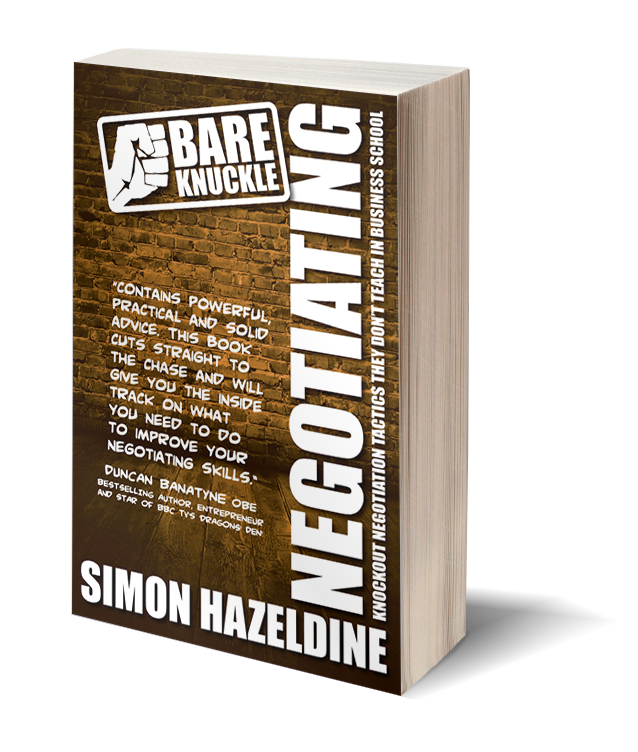
- Bare Knuckle Negotiating
- Bare Knuckle Customer Service
- The Inner Winner
- How To Lead Your Sales Team – Virtually and in Person
- Virtual Selling Success
- How To Manage Your People’s Performance
- How To Create Effective Employee Development Plans
- Virtual Negotiation Success